

Thirlmere West Public Consultation
This consultation has now concluded.
About this consultation
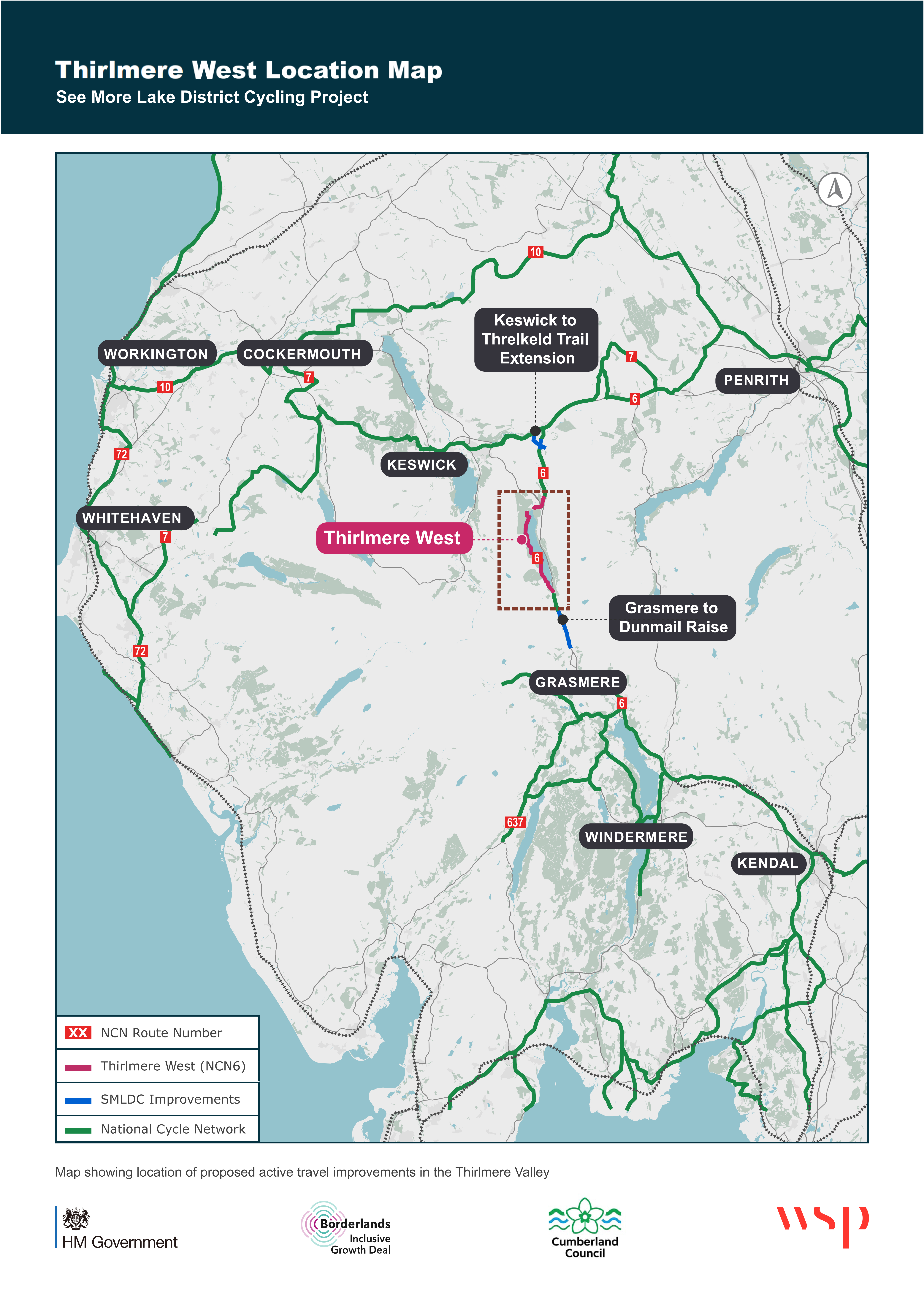
This consultation document sets Cumberland Council’s initial proposals for the Thirlmere West active travel scheme. The scheme is one of three sections identified for improvement within the See More Lake District Cycling project. It focuses on the U7003 and the A591 in the Thirlmere Valley and is funded through the Borderlands Inclusive Growth Deal.
Thirlmere West is also part of the Heart of the Lakes strategic transport corridor. This corridor is identified in the Cumbria Transport Infrastructure Plan (2022–2037) and the supporting Heart of the Lakes Active Travel Infrastructure Strategy. These documents set out a long-term vision to improve long distance active travel routes along the A591 corridor between Keswick and Kendal.
Active travel means making journeys using physically active modes of transport. In England, this includes walking, wheeling and cycling, whether travelling to work, school, local services, shops, or for leisure. Active travel can have positive benefits for people’s health and wellbeing.
Walking, cycling and wheeling as part of active travel
Walking means travelling on foot to get from one place to another. Walking is one of the most common forms of active travel and can form all or part of a journey. It also includes jogging and running.
The term "wheeling" is used to ensure that active travel is inclusive of disabled people and recognises that not all pedestrians travel on foot. It is when people use non-motorised wheelchairs, prams or pushchairs, mobility aids such as rollators, balance bikes, roller skates, skateboards or non-motorised scooters.
Cycling means travelling using a bicycle for everyday journeys and leisure trips. It includes all standard bicycles, recumbents, tandems, adapted cycles, cargo bikes, e-bikes and bicycles towing a cycle trailer or a tag-a-long.
Horse riding is not part of the UK government’s current definition of active travel. Where it is referred to in this consultation it is taken to cover riding horses and other equines for transport, recreation or exercise.
About The Borderlands Inclusive Growth Deal and the See More Lake District Cycling Project
The Borderlands Inclusive Growth Deal (Borderlands) is a partnership between five local authorities who are working together to drive economic growth across the region. Under the Improving Places theme, the Destination Borderlands programme aims to boost tourism by attracting more visitors and encouraging longer stays, building on the area’s unique assets.
See More Lake District Cycling (SMLDC) is one of the Borderlands projects. It looks to enhance cycling and walking routes along the A591 corridor between Keswick and Kendal. By filling existing gaps in the National Cycle Network (NCN), the project will create safer, continuous links and family friendly connections between destinations such as Windermere, Ambleside, Grasmere, the Thirlmere Valley and Keswick.
Three distinct sections for improvement have been identified within the SMLDC project. These are:
Thirlmere West (lead by Cumberland Council)
Grasmere to Dunmail Raise (lead by Westmorland and Furness Council)
The Keswick to Threlkeld Trail Extension (lead by Lake District National Park Authority)
Summary of the proposals being consulted on
The proposals for Thirlmere West active travel improvements are focused on making journeys by walking, wheeling and cycling safer, easier and more attractive for everyone. The improvements will enhance the existing National Cycle Network (Route 6); support sustainable travel through the Lake District National Park.
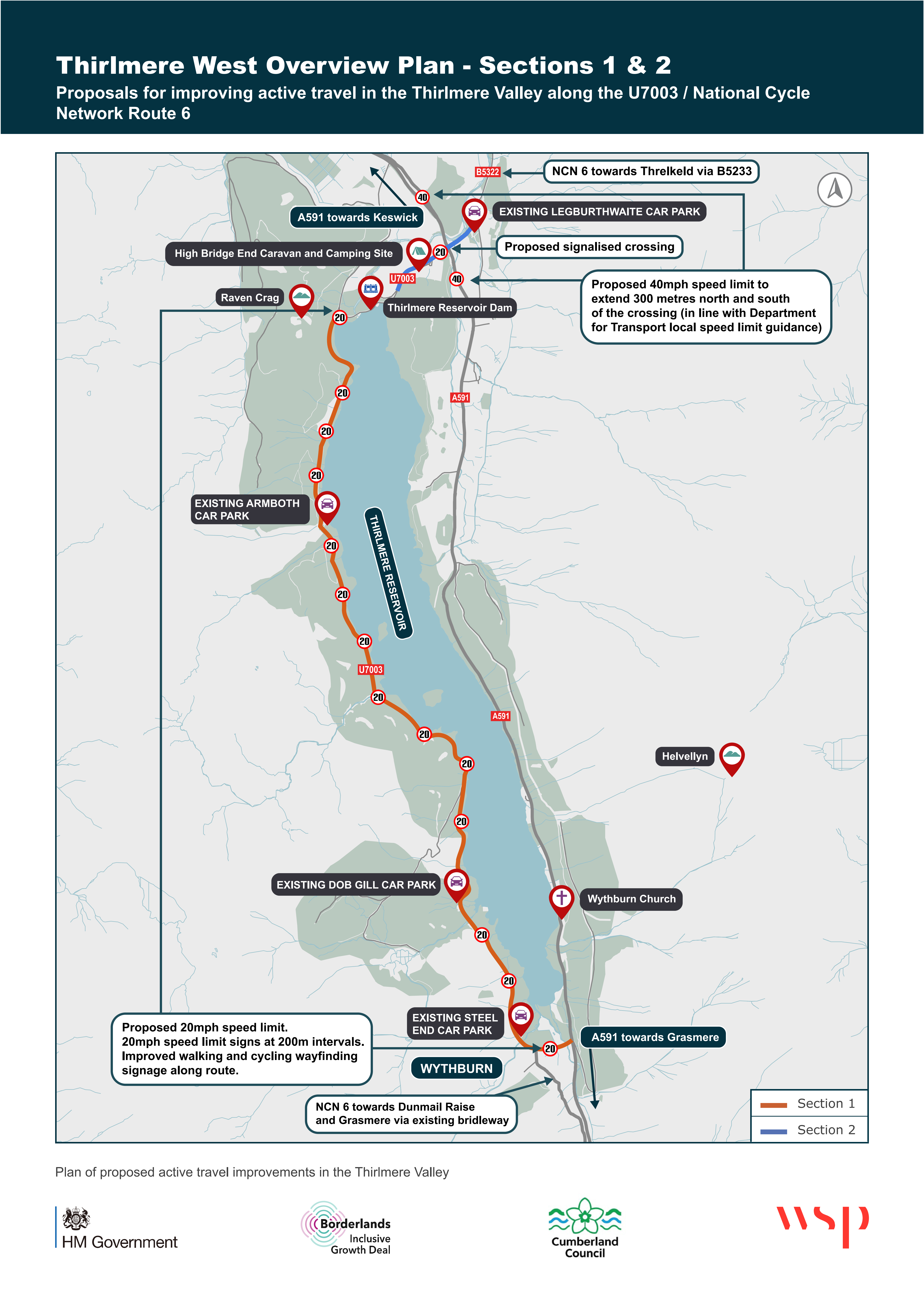
The proposals will focus on improvements to the U7003, they will also include a short section of the A591. The proposals have been split into two sections:
Section 1, U7003 from Wythburn along the west side of the Thirlmere Valley to the west end of the Thirlmere Reservoir dam below Raven Crag. This country lane is already used by people walking, wheeling, cycling and horse riding; sharing the space with vehicles. Vehicle numbers are low and the road is currently at national speed limit.
Proposals for this section focus on introducing a 20mph speed limit and creating a quiet lane environment. A quiet lane prioritises safety and enhances the enjoyment of the countryside for all active travel users. It is a rural road where drivers are encouraged to travel slowly and give priority to people walking, wheeling, cycling, and horse riding. These roads remain open to motor vehicles but are managed to reduce traffic speeds and improve safety for everyone.
Section 2, U7003 from the east end of the Thirlmere Reservoir dam, across the A591 to the B5233 at The Green. This country lane is already used by people walking, wheeling, cycling and horse riding. East of the A591 the road surface is poor with drainage issues and can be a deterrent to some cyclists and wheelers. The vehicle numbers are very low on this section of the U7003. In contrast the A591 is used by over 5,000 vehicles per day. Both sections of road are at national speed limit. There are two bus stops on the A591 served by the 555 bus service, but people can only access them by walking on the verge or in the road.
Proposals for this section include the introduction of a signalised crossing on the A591 and associated reduction in speed limit to 40mph, in the vicinity of the crossing. This will improve safety for walker, wheelers, cyclists and horse riders. Enhancing access to the existing bus stops by creating new footway links will benefit people using the number 555 bus service to access Thirlmere, by removing the need to walk in the road or on the verge to reach the bus stops. Proposals for Section 2 also include potentially upgrading the surface of the U7003 east of the A591 to the B5233, which would make this part of the U7003 more accessible for walkers, wheelers and cyclists. Associated with this would be prohibition of vehicle on this section of the route, except for access, which will enhance the general area for walking, wheeling, cycling and horse riding.
-
 Plan-01 Consultation Overview Map - Thirlmere.pdf (543 KB) (pdf)
-
Plan-02 Thirlmere West Overview Plan Sections 1 and 2 (231 KB) (pdf)
-
Plan-03 Thirlmere West Layout Plan – Section 2 (162 KB) (pdf)
-
U7003 Quiet Lane 300726 (195 KB) (pdf)
-
Proposed A591 crossing N 300726 (241 KB) (pdf)
-
Proposed 40mph speed limit transition S 300726 (219 KB) (pdf)
-
A591 bus stops location plan 310726 (334 KB) (pdf)
-
Proposed A591 crossing S 300726 (485 KB) (pdf)
